Nasal Reconstruction

Restoring form, function, and confidence
The nose is one of the most prominent facial features, playing a vital role in both appearance and breathing. Damage caused by trauma, skin cancer removal, congenital conditions, or previous surgery can affect confidence, facial harmony, and quality of life.
Mr Ranganathan provides nasal reconstruction to restore the appearance, structure, and function of the nose. He works closely with experienced Mohs dermatology surgeons to reconstruct the nose following skin cancer removal, and treats deformity resulting from trauma, congenital defects, septal perforation, and previous surgery. Each reconstruction is planned individually, using the technique best suited to the specific defect, with the aim of achieving results that are natural-looking, functional, and long-lasting.
Nasal Reconstruction in Manchester
Specialist

Rhinoplasty Care

Nasal Reconstruction Nasal Reconstruction

What Is Nasal Reconstruction?

Nasal reconstruction is a specialised surgical procedure to rebuild the nose when its structure or function has been compromised. Unlike cosmetic rhinoplasty, which primarily refines appearance, nasal reconstruction addresses structural loss or damage, restoring facial aesthetics as part of that process.

Nasal reconstruction can address:
Principles of nasal reconstruction
 
The nose occupies the central position of the face and plays a vital role in both appearance and breathing. Reconstructing a nasal defect requires careful planning and a thorough understanding of nasal anatomy, function, and facial aesthetics. The goal is not simply to replace missing tissue, but to restore a nose that looks natural, functions normally, and harmonises with the rest of the face. These are the principles that guide every reconstruction Mr Ranganathan performs.
 
Restoring form and function
Successful nasal reconstruction must achieve two equally important objectives: restoring the appearance of the nose and maintaining normal nasal breathing. A well-reconstructed nose provides structural support, preserves the nasal airway, and blends naturally with the surrounding facial features.
 
Replacing like with like
A fundamental principle of reconstructive surgery is to replace missing tissue with tissue that most closely resembles the original, matching skin colour, thickness, texture, and contour wherever possible. Using similar tissues produces the most natural and durable results.
 
Reconstructing all layers of the nose
The nose is made up of three distinct layers, each of which may need to be reconstructed depending on the size and depth of the defect:
  • Internal lining — reconstructed using techniques such as the septal mucosal flap
  • Structural framework — restored using structural grafts, such as conchal cartilage
  • External skin and soft tissue — reconstructed using local facial flaps, such as the melolabial or forehead flap
Restoring each layer is essential for both function and long-term stability.
Why Choose Manchester Rhinoplasty Clinic?

  • Tertiary referral expertise — Mr Ranganathan leads a tertiary referral nasal reconstruction service at Manchester Royal Infirmary, managing complex and revision cases
     
  • Coordinated skin cancer care — close collaboration with experienced Mohs dermatology surgeons ensures reconstruction is planned alongside cancer removal, not as an afterthought
     
  • Technique matched to the defect — reconstruction planned individually, using the approach best suited to restore both appearance and function

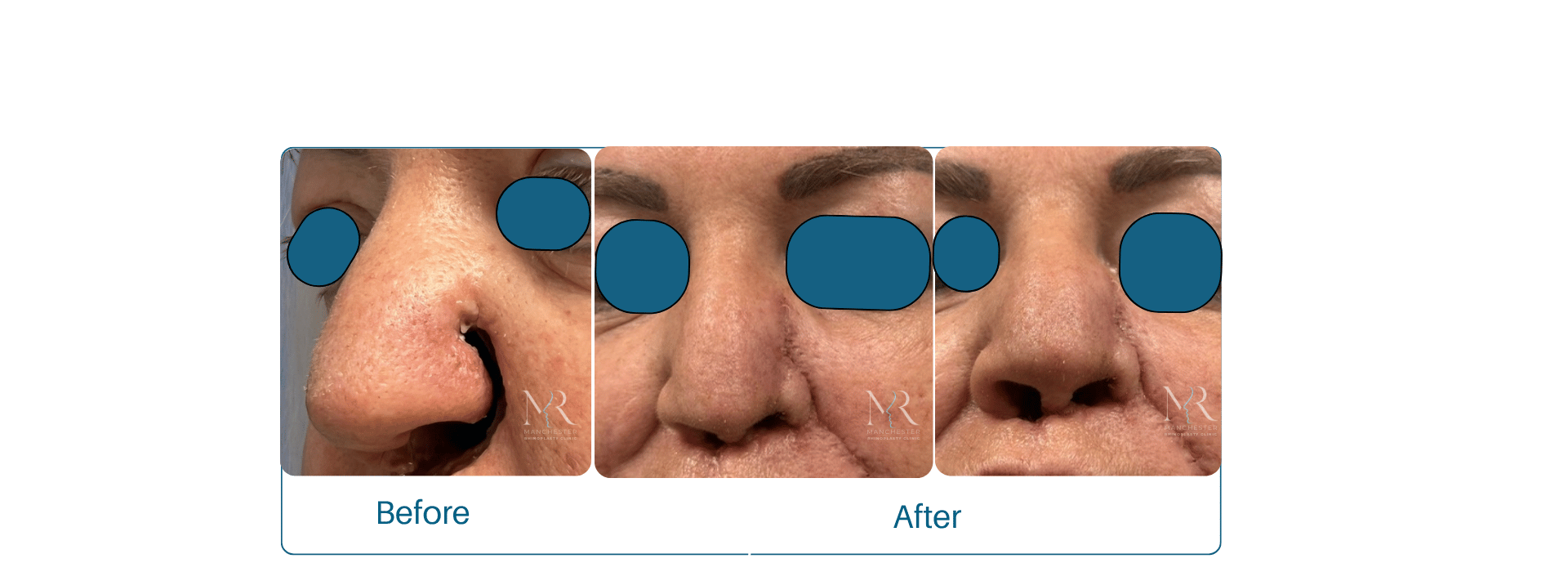
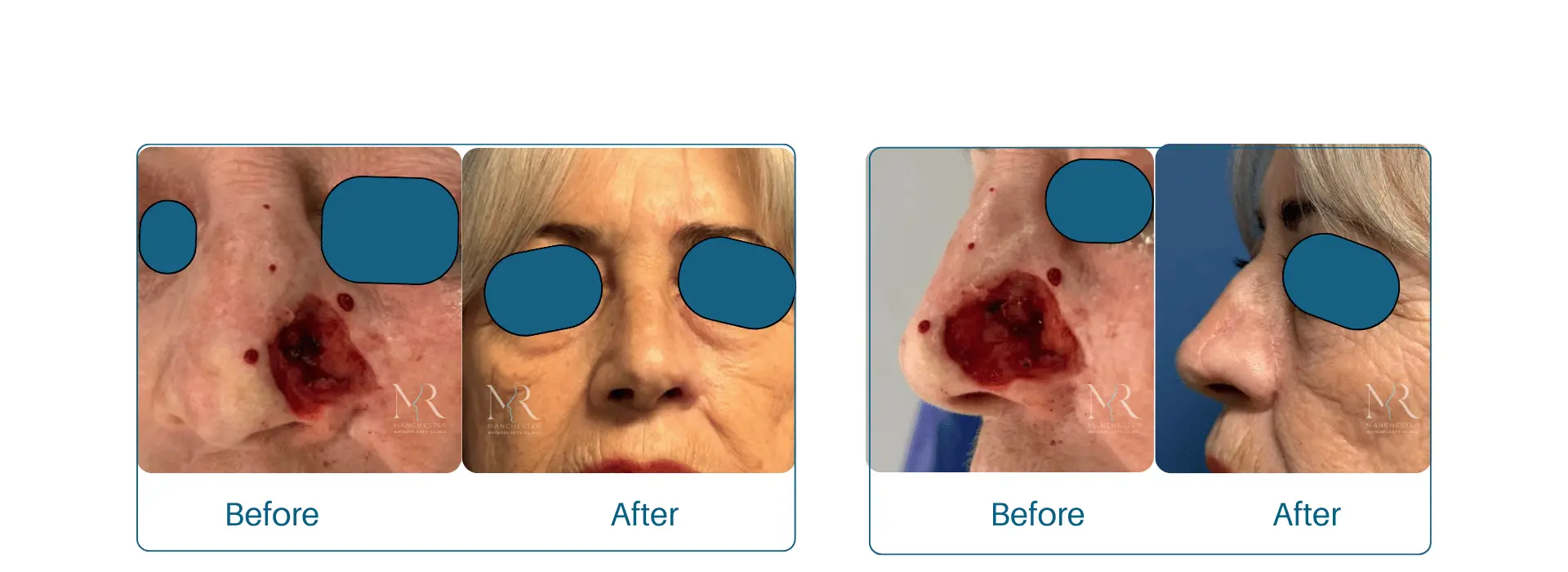
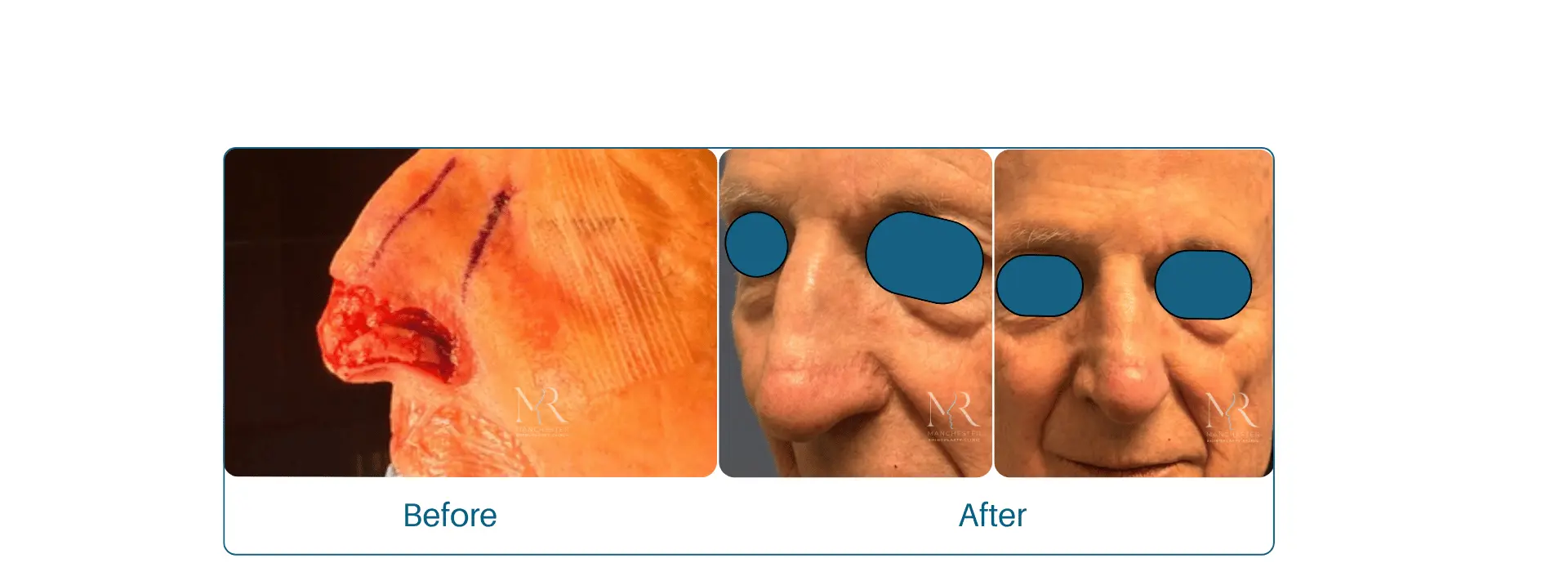
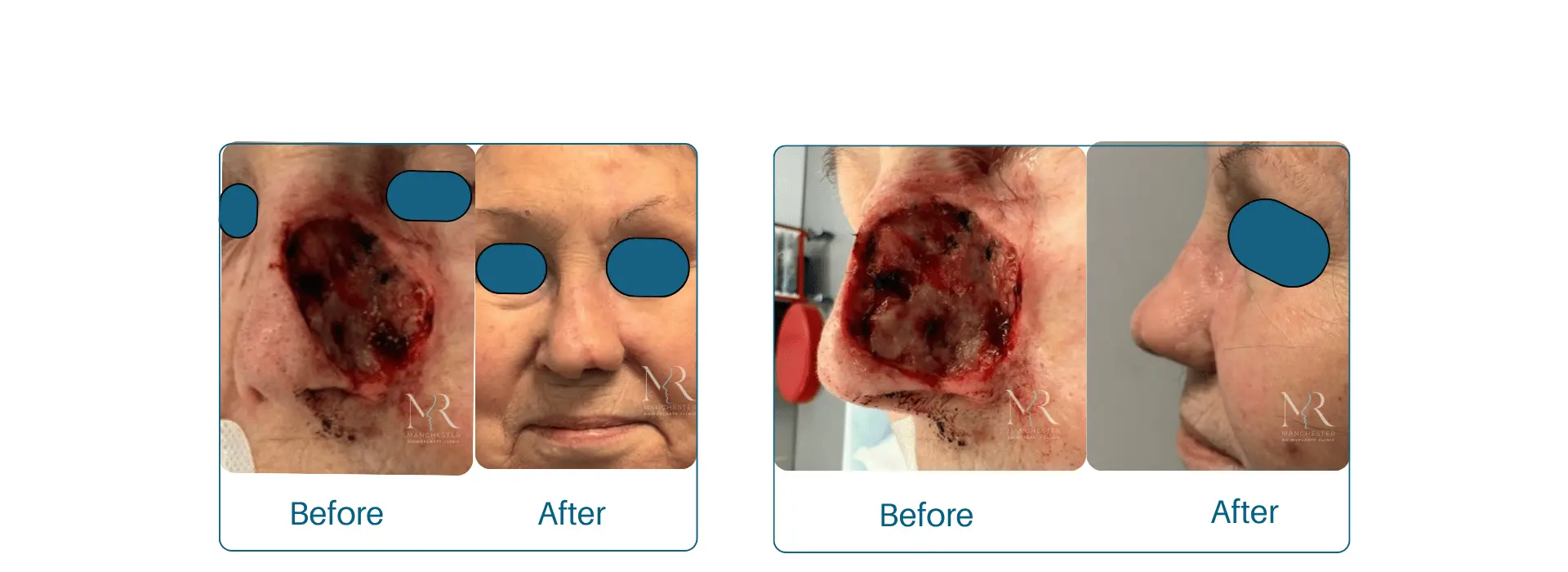
Nasal Reconstruction: Before and After Pictures

Mr Ranganathan will recommend the most appropriate technique for your individual anatomy and goals at consultation.

Frequently Asked Questions

Surgery is performed under anaesthesia, so patients are comfortable during the procedure. Post-operative discomfort is usually mild to moderate and well managed with medication.
Initial recovery typically takes four to six weeks. Final refinement continues over a longer period, usually six to twelve months, as swelling and healing settle.
Where structural damage has affected the nasal airway, reconstruction is planned to restore both appearance and function, including breathing.
Yes. In many cases, functional reconstruction can be combined with aesthetic refinement to improve overall appearance, and this is discussed as part of treatment planning.
Not necessarily. Mr Ranganathan accepts referrals from dermatologists and Mohs surgeons, and also sees patients directly for consultation and planning.
Mr Ranganathan also sees patients seeking a second opinion or revision surgery following previous reconstruction where results, breathing, or scarring have not improved.
Book Your Consultation Book Your Consultation

Make an appointment Now!

Mr Ranganathan

Consultant ENT Surgeon, Rhinologist and Facial Plastic Surgeon

FRCS (ORL-HNS), MCh, EBEC-FPRS

Get Clarification Get Clarification

Ask Mr Bas Ranganathan