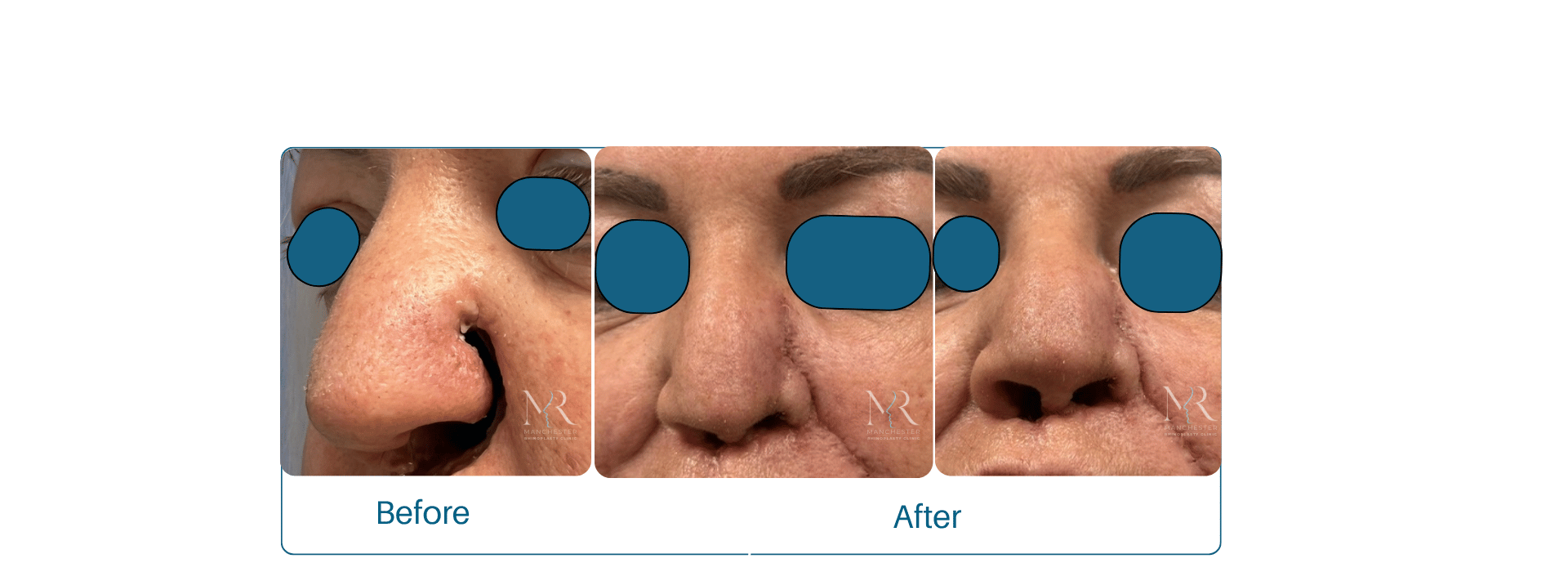
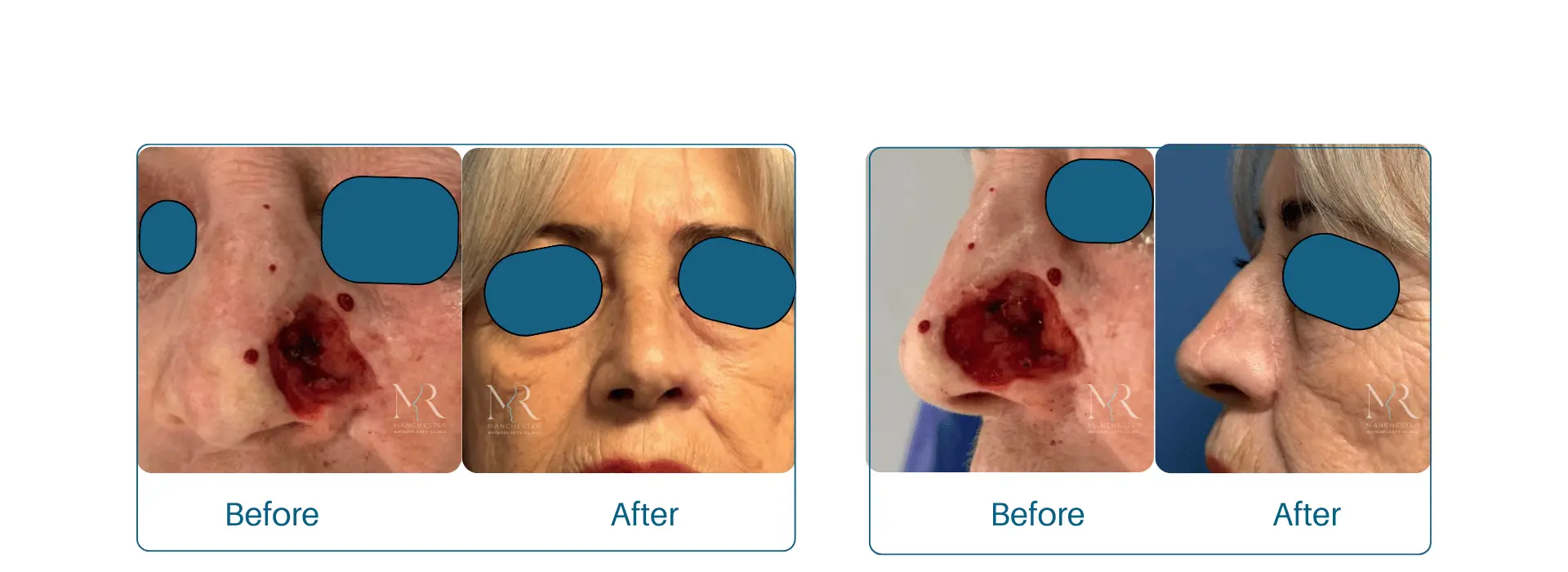
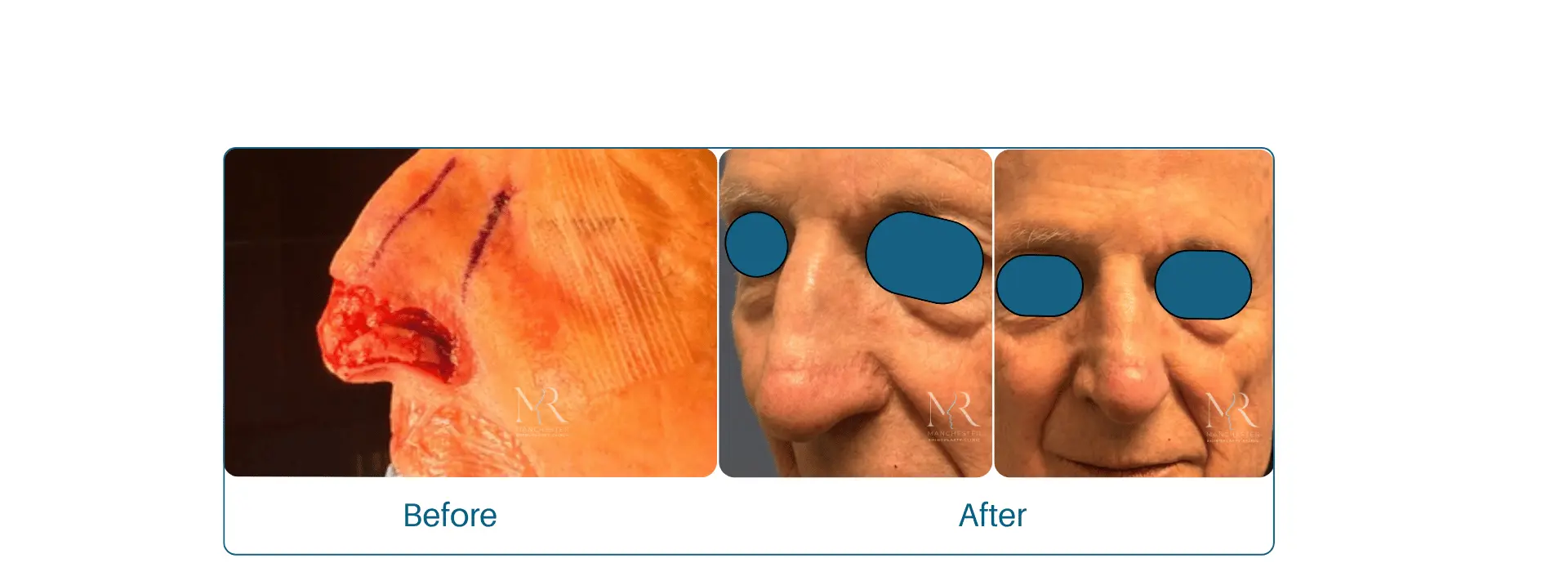
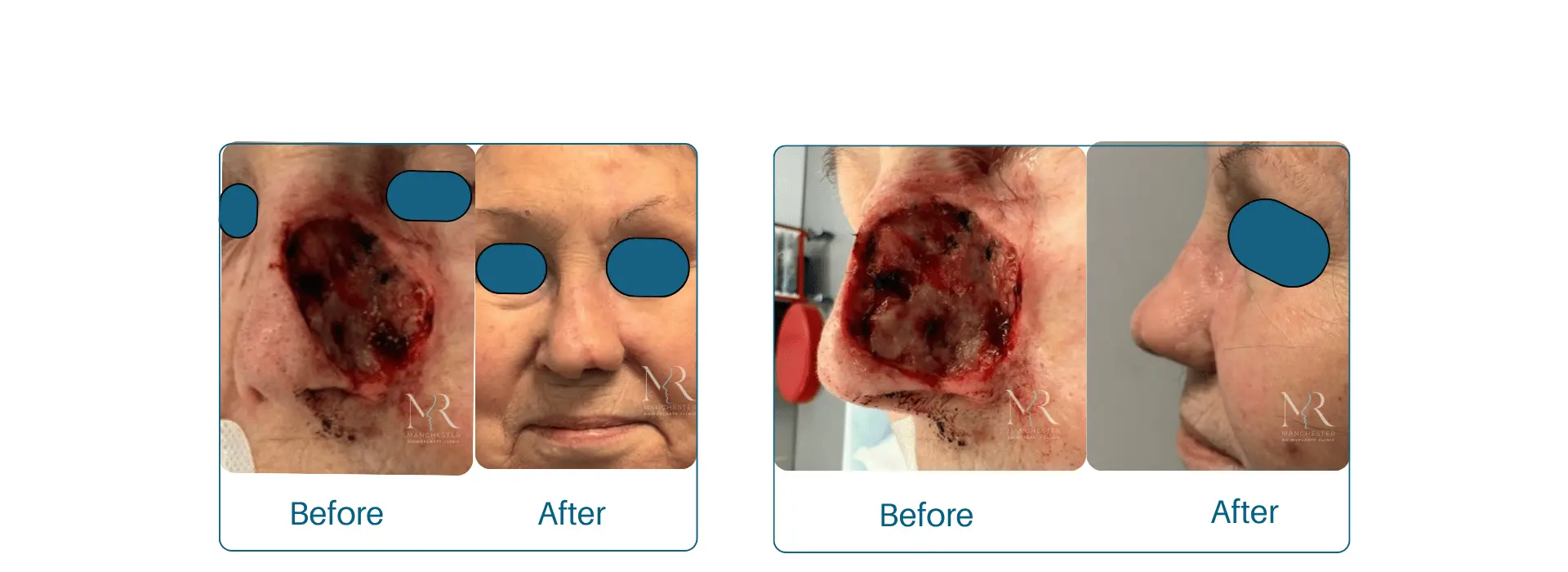
The nose occupies the central position of the face and plays a vital role in both appearance and breathing. Reconstructing a nasal defect requires careful planning and a thorough understanding of nasal anatomy, function, and facial aesthetics. The goal is not simply to replace missing tissue, but to restore a nose that looks natural, functions normally, and harmonises with the rest of the face. These are the principles that guide every reconstruction Mr Ranganathan performs.
Restoring form and function
Successful nasal reconstruction must achieve two equally important objectives: restoring the appearance of the nose and maintaining normal nasal breathing. A well-reconstructed nose provides structural support, preserves the nasal airway, and blends naturally with the surrounding facial features.
Replacing like with like
A fundamental principle of reconstructive surgery is to replace missing tissue with tissue that most closely resembles the original, matching skin colour, thickness, texture, and contour wherever possible. Using similar tissues produces the most natural and durable results.
Reconstructing all layers of the nose
The nose is made up of three distinct layers, each of which may need to be reconstructed depending on the size and depth of the defect:
- Internal lining — reconstructed using techniques such as the septal mucosal flap
- Structural framework — restored using structural grafts, such as conchal cartilage
- External skin and soft tissue — reconstructed using local facial flaps, such as the melolabial or forehead flap
Restoring each layer is essential for both function and long-term stability.



 Nasal Reconstruction